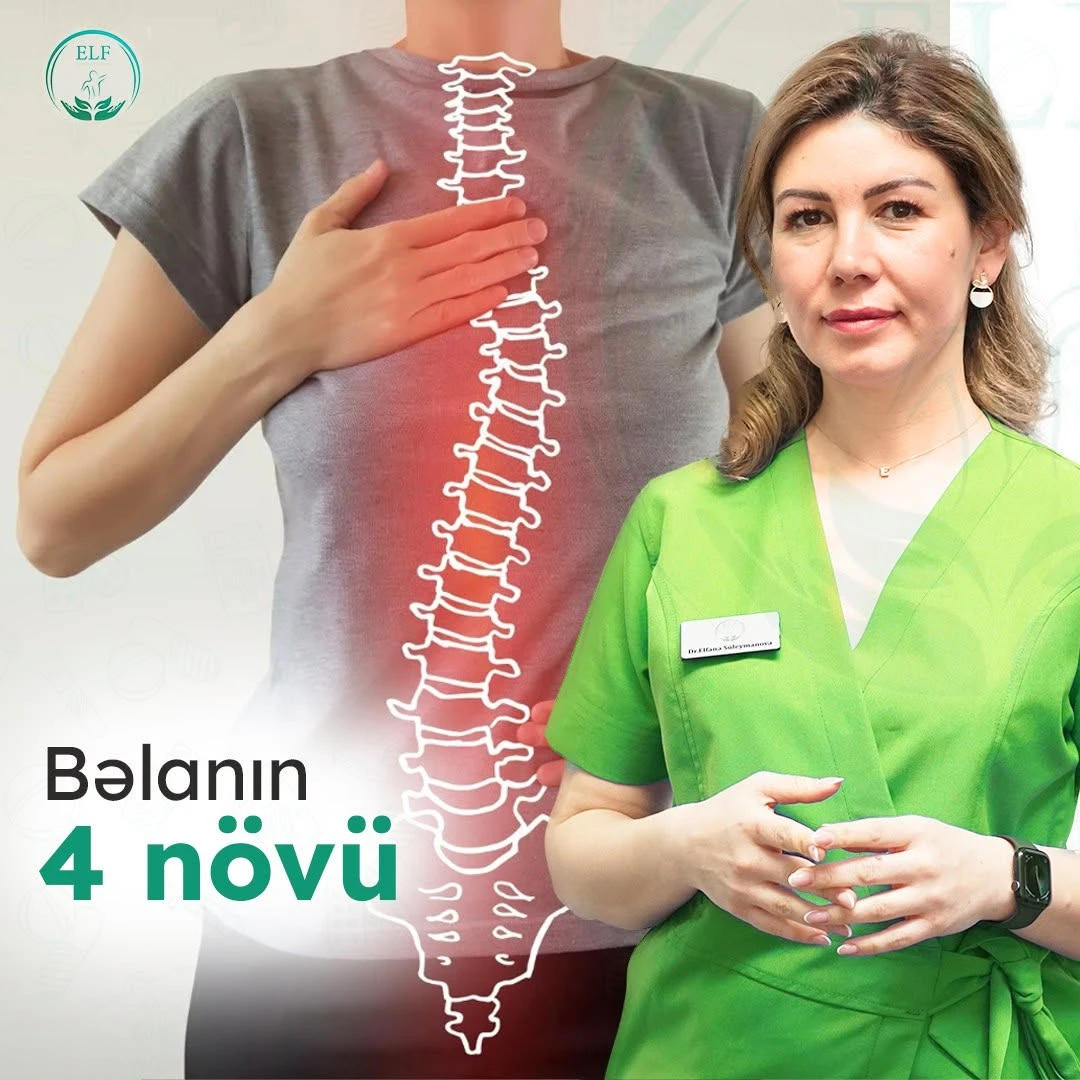
In a normal spine, the vertebrae line up in a straight line when viewed from the front and back. Scoliosis is a deformity characterized by this line curving to the right or left, taking on an “S” or “C” shape.
When the spine is curved, the vertebrae rotate. In the thoracic region this may result in a rib hump, and in the lumbosacral region in asymmetry. The curvature reduces the volume of the chest cavity.
1The 4 main types of scoliosis
- Segmental scoliosis — only one segment of the spine curves, while the rest remains straight
- Thoracic (dorsal) scoliosis — the most common type; the spine curves to the right or left in the upper back, accompanied by rotation of the vertebrae
- Lordoscoliosis — the curvature is in the lumbar region, appearing as a forward bulge toward the abdomen
- Kyphoscoliosis — the curvature is in the thoracic region, appearing as a backward bulge of the upper back
2Causes
- Genetic predisposition
- Poor posture — sitting in an incorrect position for long periods
- Birth trauma (including during cesarean section) and subsequent spinal injuries
- Irregular growth spurts — uneven bone growth during puberty
- A heavy and incorrectly carried school bag
3If not treated in time
- Reduced lung volume and chronic oxygen deficiency in the tissues
- Increased pressure in the pulmonary circulation
- Chest pain and shortness of breath
- Impaired kidney function
- Compression of the spinal nerve roots
- Impaired function of the pelvic organs
4Our approach
A patient with scoliosis should be treated as a whole organism. The goal of treatment is not only to visibly restore correct posture, but also to restore the function of the internal organs. Osteopathy + electrotherapy and physical modalities + rehabilitation + therapeutic massage are applied together.
5How is scoliosis treated with osteopathy?
- Fascial release — tissue tension is reduced and balance is restored
- Spinal mobilization — movement restrictions are released
- Posture correction — manual techniques restore spinal and muscular balance
- Regulating the respiratory diaphragm
- Holistic approach — the root of the problem is investigated
Methods we use
Osteopathy
A hands-on treatment method that works on the musculoskeletal system, internal organs, spine, nervous system a…
Schroth therapy
A specialized breathing and posture therapy used in the treatment of scoliosis.
Therapeutic exercise (remedial exercise therapy)
Treatment alone is not enough — movement matters too. The best results come from consistent exercise.
Therapeutic massage
A medical procedure that is used both as part of a comprehensive treatment program and on its own.
Physiotherapy
No two pains are the same — so no two patients’ treatments should be the same either.
Spine and posture analysis
How the body stands, moves and distributes load tells us a great deal about many functional changes.
The 4 main types of scoliosis