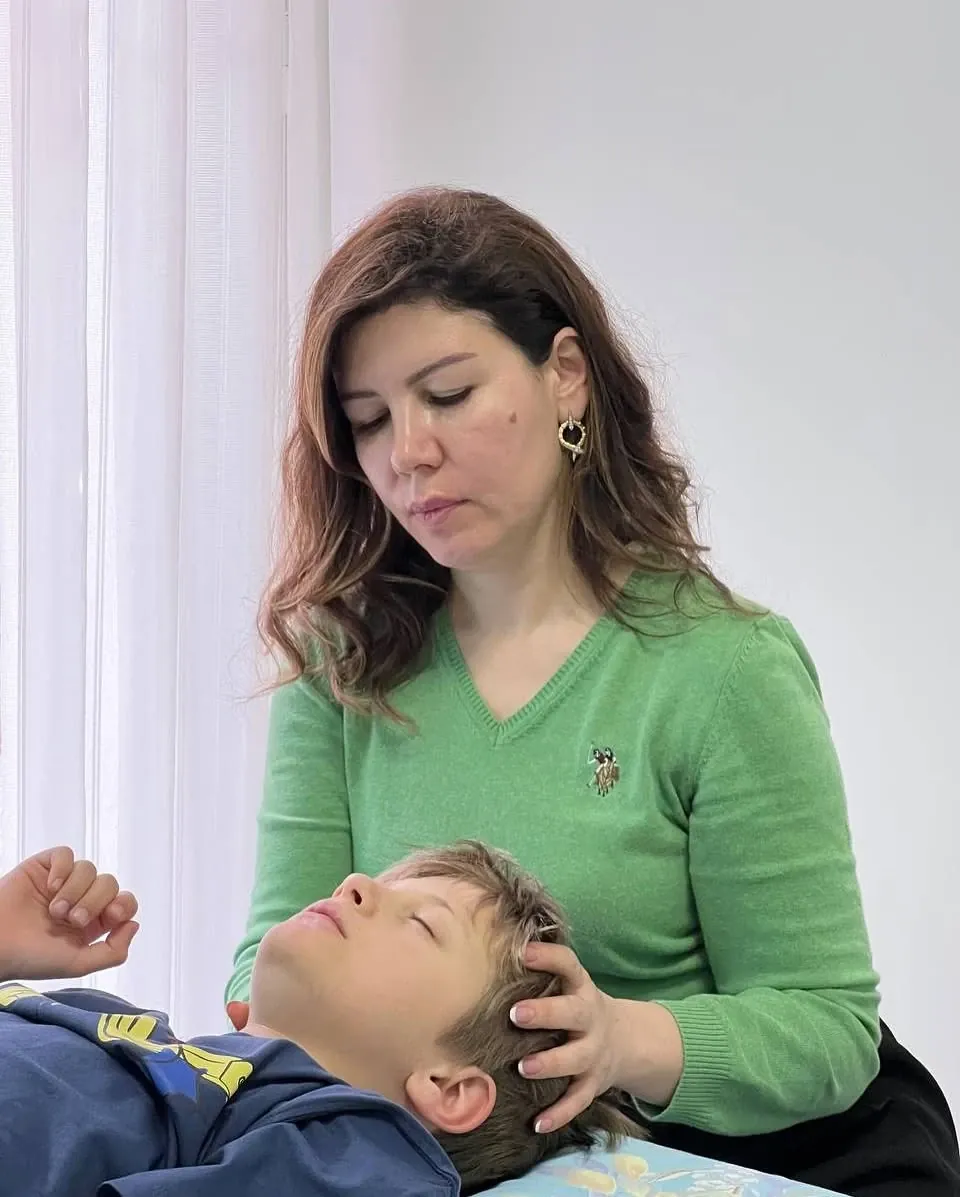
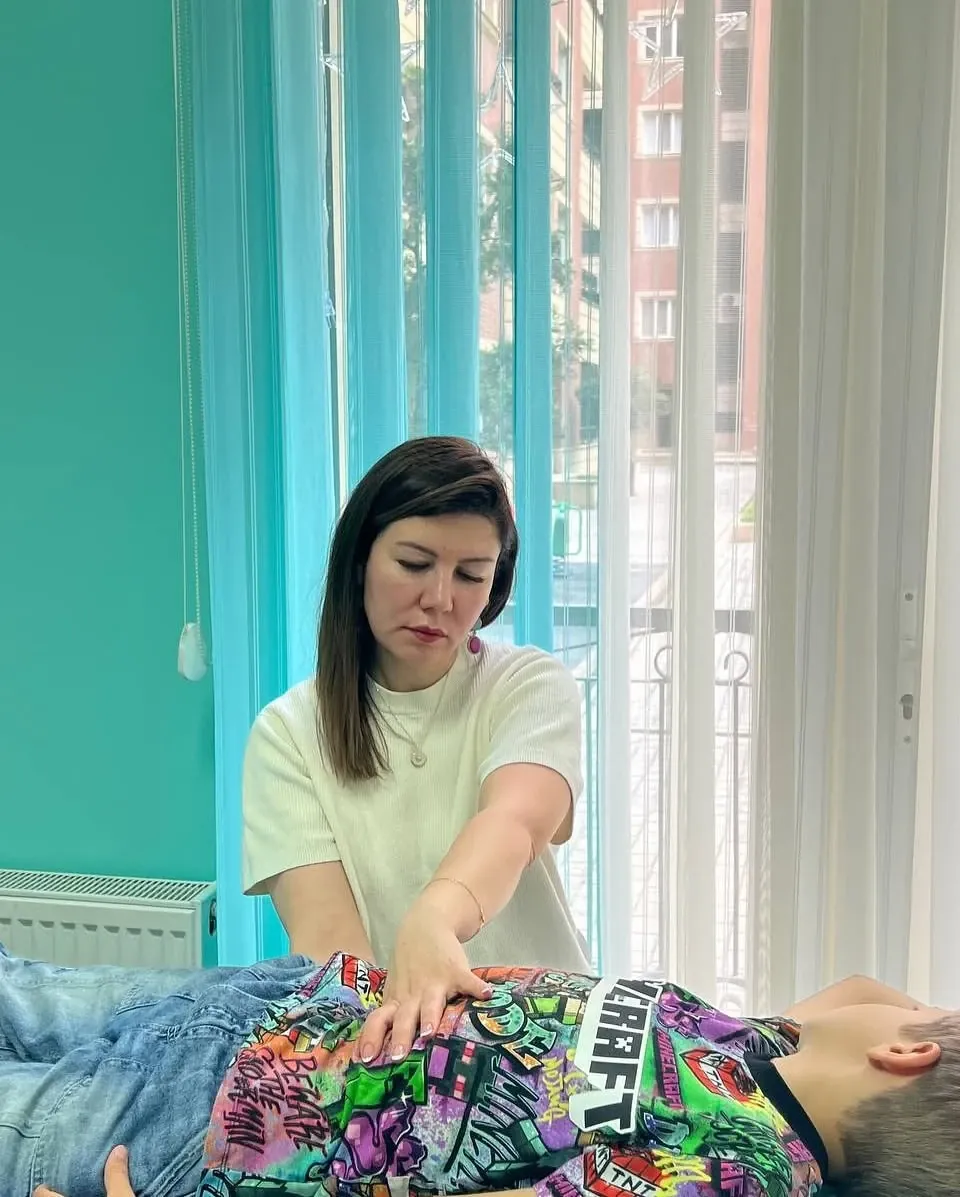
Osteopathy for infants is a method of gentle therapeutic contact with delicate, caring hands. This method can also be applied in infants — on condition that the child is examined by a doctor first. With soft movements the osteopath checks the infant's whole body and releases the compressions in the body that may cause many problems.
16 signs that mean your baby should see an osteopath
- Weak sucking reflex
- Excessive vomiting, frequent spitting up
- Sleep difficulties
- Screaming and restlessness for no apparent reason
- Head deformity, the head constantly turned to one side
- Feeding difficulties
2When should the first appointment be?
Newborns (0–1 month) — the first weeks after birth are the optimal time. Especially after a difficult or rapid birth, cesarean section, umbilical cord entanglement, the use of vacuum extraction or forceps, or when there is head asymmetry or torticollis.
Infants (1–12 months) — sleep disorders, delayed motor development, hypertonia or hypotonia, colic and gas problems, a tendency to turn the head to one side only.
Older children (over 1 year) — frequent colds and weak immunity, postural disorders, hyperactivity and attention problems, the after-effects of falls and injuries, speech delay.
3What does osteopathy treat in children?
- Complications of birth trauma
- Colic in newborns
- Chest wall deformities
- Blockage of the first cervical vertebra (atlas)
- Asymmetry of the skull bones
- Delayed psychomotor development
- Distractibility and memory problems
- Postural disorder, scoliosis, kyphosis
- Wry neck (torticollis)
- Flat feet and valgus deformity
When should you consider it?
- Birth trauma
- Infant colic and gas
- Wry neck (torticollis)
- Sleep disorders
- Delayed motor development
- Supportive therapy for autism spectrum disorder
- Hyperactivity
Conditions this method is used for
From a pediatric appointment